


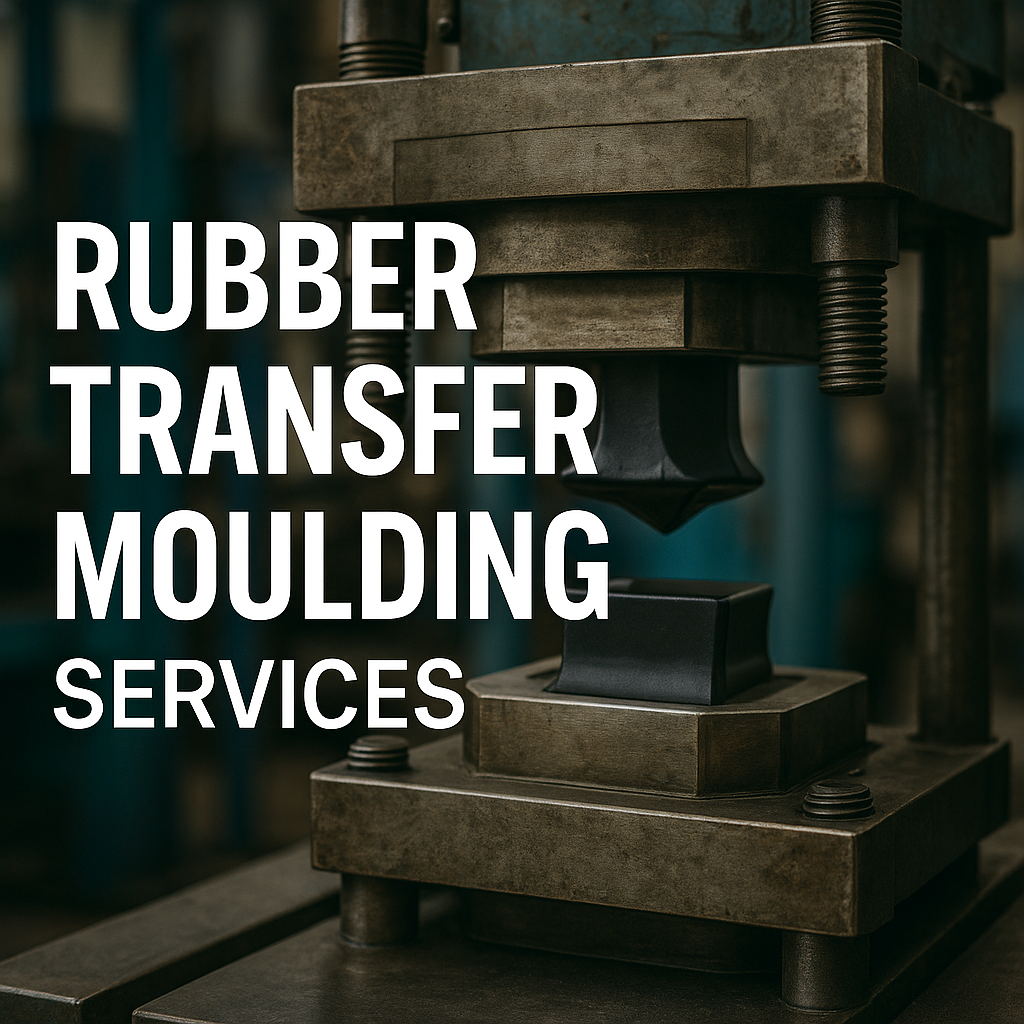
Rubber Transfer Moulding Services
At Clifton Rubber, we specialise in rubber transfer moulding, a process well-suited to complex technical parts and insert moulding applications. Transfer moulding bridges the gap between compression and injection, offering greater precision and design flexibility while remaining cost-effective for medium production volumes.
With over 50 years of moulding expertise, we supply bespoke transfer moulded parts across industries including electrical, transport, agriculture, recycling, and many others. Our in-house toolroom and ISO 9001-certified quality system ensure accuracy, reliability, and faster turnaround times.
How Does Rubber Transfer Moulding Work Step by Step?
- Loading – Rubber is placed in a chamber above the mould.
- Transfer – A plunger forces the material through sprues into the mould cavity.
- Curing – Heat and pressure vulcanise the part.
- Ejection – The part is removed and inspected.
- Finishing – Trimming or deflashing ensures a clean finish.
This method is ideal for insert moulding, bonding rubber securely to metal or plastic parts.
Advantages of Rubber Transfer Moulding
- Complex designs and detailed features achievable.
- Tighter tolerances than compression moulding.
- Insert moulding capability for hybrid parts.
- Cost-effective for medium production runs.
- Material versatility, including EPDM, silicone, nitrile, and polyurethane.
Industries We Supply
Transfer moulded components are widely used in:
- Electrical Equipment – gaskets, housings, seals.
- Transport – precision vibration-control parts.
- Agriculture – custom seals, technical mouldings.
- Recycling – polyurethane components for high-wear machinery.
Beyond these sectors, Clifton Rubber’s transfer moulding service supports customers in many other industries, from general manufacturing to niche technical fields.
Why Choose Clifton Rubber?
- 50+ years’ technical moulding expertise.
- Full in-house toolmaking for fast, accurate tooling.
- ISO 9001-certified for consistent quality.
- Specialists in insert moulding and bespoke solutions.
- Proven track record across transport, electrical, agriculture, recycling, and beyond.
Contact Clifton Rubber today to discuss your transfer moulding requirements.